
TI-82 Online Calculator
Simulate basic TI-82 calculator functions
This simulator provides basic arithmetic functions similar to a TI-82 calculator. For advanced scientific functions, consider using a dedicated calculator app.
TI 82 online is a powerful, accessible tool for students, educators, and professionals who need a reliable graphing calculator without the physical device.
What is the TI 82 Online Calculator/Tool?
The TI 82 Online Calculator/Tool is a web-based emulation of the classic Texas Instruments TI-82 graphing calculator. It replicates the core functionality of the hardware device, allowing users to perform complex mathematical calculations, graph functions, and analyze data directly from their browser. This digital version is ideal for homework, exam preparation, and classroom instruction, providing the same user experience as the physical calculator without the need for a purchase or installation.
- TI-82 Online Calculator
- What is the TI 82 Online Calculator/Tool?
- How to Use the TI 82 Online Calculator/Tool?
- What is a TI-82 Online Calculator?
- Understanding Web-Based Graphing Calculators
- Key Features of a TI-82 Emulator
- Why Use a TI-82 Online Instead of the Physical Device?
- Top Free TI-82 Online Alternatives
- TI-82 Online by Desmos vs. WebCalc
- How to Use a TI-82 Online for Math Classes
- Limitations and Accuracy of Virtual Calculators
- TI-82 Online vs. TI-84 Plus CE Web Emulators
- Frequently Asked Questions
- Is there an official TI-82 online calculator from Texas Instruments?
- Can I use a TI-82 online calculator on my phone or tablet?
- Are TI-82 online calculators free to use?
- Do online TI-82 calculators work for SAT or ACT exams?
- What's the difference between a TI-82 and TI-83 online calculator?
- Can I save my work on a TI-82 online calculator?
- How accurate are graphing calculators online compared to the physical TI-82?
How to Use the TI 82 Online Calculator/Tool?
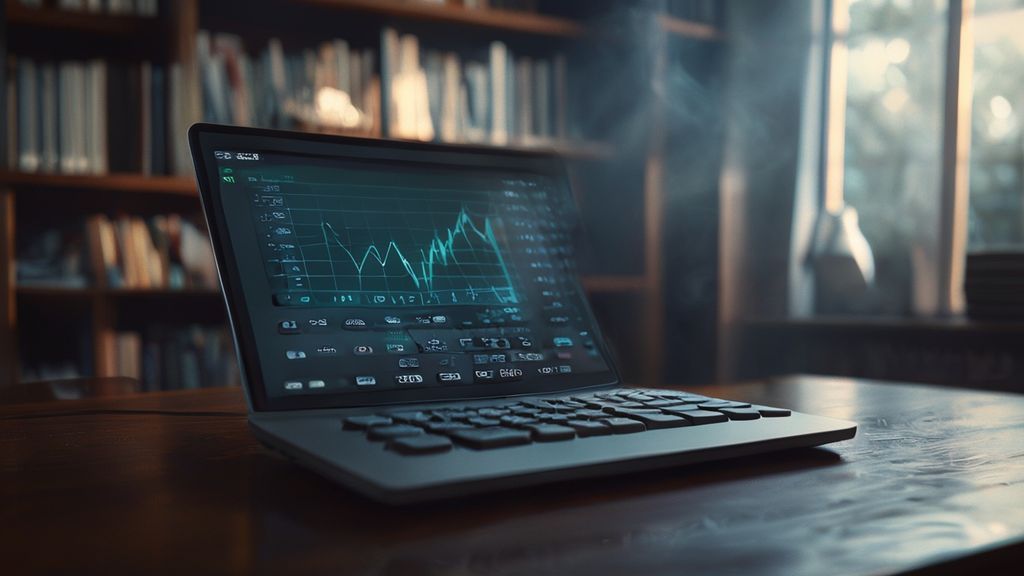
Using the online tool is straightforward. Follow these steps to get started:
- Access the Tool: Navigate to the website hosting the TI 82 online calculator. The interface will load directly in your web browser.
- Understand the Interface: The screen displays the calculator’s LCD. Below it, you will find a keypad with all the standard buttons (like Y=, WINDOW, GRAPH, and numeric keys).
- Enter Equations: Use the keypad to input mathematical expressions. You can type directly into the calculator’s command line, just as you would on the physical device.
- Graph Functions: To plot a graph, press the Y= button to enter function mode. Type your equation (e.g., y=x^2+2), then press GRAPH to visualize it.
- Adjust the View: Use the WINDOW menu to set the X and Y ranges for your graph. This helps in zooming in or out to see different parts of the function.
- Explore Modes: Experiment with other modes like STAT for data analysis and 2ND for secondary functions (accessed by pressing the 2ND key first).
- Save Your Work: While the online tool may not have a permanent save feature like a physical calculator’s memory, you can often take screenshots or copy results for your records.
Remember, practice is key to mastering the TI 82 online calculator. Start with simple calculations and graphs to become familiar with the layout and functionality.
What is a TI-82 Online Calculator?
An online TI-82 calculator is a web-based emulator or simulation that replicates the functionality of the classic Texas Instruments TI-82 graphing calculator directly in a browser. Instead of purchasing a physical device, users can access a virtual interface that mimics the keypad, screen, and computational capabilities of the original hardware. These platforms are typically built using HTML5, JavaScript, and other web technologies to create an interactive experience that requires no software installation or downloads. The primary goal is to provide students, educators, and professionals with free, accessible tools for graphing, statistical analysis, and algebraic computations. This approach democratizes access to powerful mathematical tools, especially for those who may not have the budget for a physical calculator. It also serves as an excellent way to practice for standardized tests or classroom activities without the need for a dedicated device.
Understanding Web-Based Graphing Calculators
Web-based graphing calculators function by emulating the core processing and display systems of their physical counterparts within a secure browser environment. The technology relies heavily on JavaScript to handle user input, perform calculations, and render graphs dynamically on an HTML5 canvas. Unlike desktop software, these online tools are platform-agnostic, meaning they work seamlessly on Windows, macOS, ChromeOS, and even mobile devices with a modern browser. The server-side components are minimal, as the computational load is handled by the user’s own device, ensuring responsive performance for most standard tasks. This architecture also allows for easy updates and maintenance by developers, who can push new features or bug fixes without requiring any action from the end-user. Security is a key consideration, as reputable sites operate in a sandboxed browser environment, preventing any potential harm to the user’s system. The educational value is immense, as these tools often include tutorials, example problems, and the ability to save or export work for later review.
Key Features of a TI-82 Emulator
A high-quality TI-82 emulator meticulously replicates the key features that made the original calculator a staple in mathematics and science classrooms. The most critical feature is the graphing function, which allows users to plot functions, parametric equations, and polar coordinates with adjustable viewing windows and trace capabilities. Beyond graphing, these emulators include a full-featured computer algebra system (CAS) for symbolic manipulation, enabling users to simplify expressions, solve equations, and factor polynomials. Statistical functions are also comprehensively implemented, providing tools for calculating descriptive statistics, linear regression, and hypothesis testing. The programming environment is often preserved, allowing users to write, edit, and run TI-BASIC programs directly in the browser. Many online versions also enhance the original by adding modern conveniences such as copy-paste functionality, the ability to save sessions, and integration with cloud storage. Furthermore, they frequently offer a “history” feature, which logs all previous calculations and graphs, providing a valuable study aid. The user interface is designed to be identical to the physical calculator, with a familiar button layout and a multi-line LCD screen simulation, ensuring a smooth transition for users already acquainted with the hardware.
Why Use a TI-82 Online Instead of the Physical Device?
There are several compelling reasons to opt for an online TI-82 calculator over a physical device, primarily centered on cost, convenience, and accessibility. The most significant advantage is financial; a physical TI-82 can cost over $100, while web-based emulators are typically free or available for a nominal subscription fee, removing a substantial barrier for students. Convenience is another major factor, as an online calculator is always available on any internet-connected device, eliminating the risk of forgetting or losing a physical unit. This ubiquity is particularly useful for collaborative work, as multiple users can access the same tool simultaneously from different locations. From an educational standpoint, online calculators often provide enhanced features not found on the original hardware, such as the ability to overlay multiple graphs, share visualizations via a link, or access a built-in library of functions. For professionals in fields like engineering or data analysis, the ability to quickly run calculations on a laptop or tablet without carrying extra equipment streamlines workflow. Additionally, using an online tool is environmentally friendly, reducing electronic waste associated with manufacturing and disposing of physical calculators. Finally, for test preparation, many online platforms offer practice modes and instant feedback, which can be more adaptive and instructive than the static environment of a physical calculator.
For students and educators seeking a TI-82 calculator for graphing, statistics, or algebra classes without purchasing physical hardware, several robust online alternatives exist. These web-based tools replicate the core functionality of the Texas Instruments TI-82, allowing users to plot functions, solve equations, and perform statistical calculations directly in a browser. The primary advantage is universal accessibility; whether on a Chromebook, tablet, or shared computer, a TI-82 online tool requires no installation and often no account creation. However, the experience varies significantly between platforms. Some are simple web ports of the calculator’s interface, while others are sophisticated graphing engines that surpass the original device’s capabilities. Understanding the differences between these free options is crucial for selecting the right tool for academic work.
Top Free TI-82 Online Alternatives
When searching for a TI-82 online, you will encounter a few standout platforms that offer a reliable, free experience. These alternatives cater to different needs, from a faithful visual replica to a powerful computational engine. The most notable include the official TI-82 emulator from Desmos, WebCalc, and several other graphing calculator websites. Each platform has unique strengths and weaknesses, particularly in terms of user interface, feature set, and accuracy. Choosing the right one depends on whether your priority is a familiar keypad layout for learning the TI-82’s specific button functions or a more advanced graphing tool that can handle complex calculations with greater ease.
- Desmos TI-82 Graphing Calculator: This is arguably the most polished and widely used free online TI-82 alternative. It is developed by Desmos, a company renowned for its powerful online graphing calculator. The interface is a clean, high-fidelity digital replica of the physical TI-82, complete with the characteristic grey keypad and blue buttons. It accurately simulates the TI-82’s menu system, key presses, and display limitations, making it an excellent tool for students who need to learn the specific workflow of the TI-82 for standardized tests or classroom instruction. It supports graphing, statistics, and matrix operations as the original device does.
- WebCalc: WebCalc offers a more straightforward, no-frills approach to TI-82 functionality. It often appears in search results for “TI-82 online” and provides a basic calculator interface that can handle many of the TI-82’s algebraic and graphing tasks. While its visual design may not mimic the TI-82 as closely as Desmos, it is highly functional for quick calculations and graphing simple functions. It is a good option for users who need the computational power of a TI-82 without the visual distraction of a full emulator interface.
- Other Graphing Calculator Websites: Several other educational websites host their own versions of online graphing calculators that can perform TI-82-equivalent functions. These may not be branded as TI-82 emulators but often include modes for statistical plots, function graphing, and equation solving. They can be useful as supplementary tools, especially if the primary TI-82 emulator is experiencing high traffic or technical issues.
TI-82 Online by Desmos vs. WebCalc
A direct comparison between the Desmos TI-82 emulator and WebCalc highlights the fundamental trade-off between authenticity and simplicity. The Desmos TI-82 is designed for fidelity. Its interface is a pixel-perfect digital copy, which is invaluable for instructional purposes. Teachers can assign problems that require specific TI-82 button sequences, and students can follow along exactly as they would with a physical calculator. This is particularly important for courses that prepare students for exams where the TI-82 is the standard tool. The Desmos version also benefits from the underlying Desmos engine, which is known for its smooth graphing performance and accurate rendering of mathematical functions. However, this detailed interface can feel slightly slower to load and may be overwhelming for a user who simply wants to plot a quick graph without learning the TI-82’s specific menu navigation.
WebCalc, on the other hand, prioritizes speed and ease of access. Its interface is typically more minimalist, often resembling a standard scientific calculator with additional graphing tabs or menus. This design makes it faster to learn and use for basic tasks. For a student who needs to quickly check a calculation or plot a line without navigating through multiple TI-82-style menus, WebCalc can be more efficient. However, it lacks the educational value of learning the TI-82’s specific workflow. Furthermore, while WebCalc is generally accurate for standard algebraic functions, its graphing capabilities and handling of advanced statistics might not be as robust or visually refined as those in the Desmos TI-82 emulator. The choice ultimately boils down to the user’s goal: learning the TI-82’s specific operation (Desmos) versus performing quick, general-purpose graphing calculations (WebCalc).
How to Use a TI-82 Online for Math Classes
Integrating a TI-82 online tool into a math class requires a structured approach to ensure students can effectively use it for homework, projects, and exam preparation. The first step is to select a consistent platform. If the curriculum is built around the TI-82’s specific functions, the Desmos TI-82 emulator is the ideal choice. Teachers should provide direct links to the tool and, if possible, create a short tutorial demonstrating key functions such as entering functions in the “Y=” editor, adjusting the window settings, and using the “2nd” and “ALPHA” keys. It’s also important to address technical requirements; while most tools work on any modern browser, students should be advised to use Google Chrome or Firefox for the best performance and to ensure they have a stable internet connection.
For classroom activities, the online TI-82 can be used for real-time demonstrations. Teachers can share their screen and walk through problems step-by-step, with students following along on their own devices. This is especially useful for visual learners. For homework, students can use the online calculator to check their work or complete assignments that require graphing. It is crucial, however, to establish guidelines. Teachers should clarify whether the online tool is permitted for all assignments or only for specific graphing-related tasks. To prevent over-reliance, it’s beneficial to assign problems that require understanding the underlying concepts, not just the calculator’s output. For example, after graphing a quadratic function, students could be asked to explain how changes in the coefficients affect the parabola’s shape and vertex.
Finally, preparation for exams that use physical TI-82 calculators must be addressed. While the online emulator is excellent for practice, students need to translate their skills to the physical device. Teachers should encourage students to practice on a physical TI-82 (borrowed from the school or a classmate) in the weeks leading up to an exam. The online tool can still be used for reviewing concepts and practicing problems, but the muscle memory for the physical button layout is essential for timed tests. Providing a side-by-side comparison of the online and physical interfaces can help students make this transition smoothly.
Limitations and Accuracy of Virtual Calculators
While TI-82 online alternatives are incredibly useful, they come with inherent limitations that users must understand to avoid errors in their work. The most significant limitation is the dependency on internet connectivity and browser stability. Unlike a physical calculator, which is always available and has a dedicated battery, an online tool can become inaccessible due to poor internet, browser crashes, or website maintenance. This can be a critical issue during timed assignments or exams if a student relies solely on the online version. Furthermore, performance can vary depending on the device’s processing power and memory. Complex graphs or large data sets may render slowly or cause the browser to lag, which can be frustrating and disruptive to the learning process.
Another important consideration is the accuracy of the calculations and graphing. While reputable platforms like Desmos are highly accurate for standard mathematical operations, there can be subtle differences in how they handle edge cases compared to a physical TI-82. For instance, the rounding algorithms or the precision of certain statistical functions might differ slightly. In most academic contexts, these differences are negligible, but for advanced or highly precise calculations, a physical TI-82 might be considered the gold standard. Additionally, the visual representation of graphs on a website can be influenced by the screen resolution and browser zoom settings, which might lead to a slightly distorted view compared to the fixed pixel grid of a physical calculator’s screen.
Finally, there is the issue of functionality. While online tools mimic the core features of a TI-82, they may not replicate every single function or menu item perfectly. Some of the more obscure or advanced features of the TI-82, such as specific programming commands or certain financial functions, might be missing or implemented differently. Users should not assume that every function available on the physical TI-82 has a direct, identical counterpart online. It is always advisable to test unfamiliar functions with known inputs to verify the tool’s output before relying on it for critical calculations. For this reason, a hybrid approach—using the online tool for learning and practice, and a physical calculator for high-stakes exams and precise work—is often the most prudent strategy.
TI-82 Online vs. TI-84 Plus CE Web Emulators
When exploring online graphing calculators, users often encounter emulators for the TI-84 Plus CE, a more advanced model than the TI-82. Comparing the TI-82 online alternatives to TI-84 Plus CE web emulators reveals significant differences in capability, interface, and target audience. The TI-82 is a classic calculator from the late 1980s and early 1990s, with a monochrome screen and a focus on fundamental graphing, statistics, and algebra. The TI-84 Plus CE, released decades later, is its modern successor, featuring a color screen, a more powerful processor, a rechargeable battery, and expanded functionality, including more sophisticated graphing tools, data collection capabilities, and a more intuitive menu system.
The online emulators for each device reflect these hardware differences. A TI-82 online emulator, like the one from Desmos, will typically have a grey-scale, pixelated display that mimics the original’s low-resolution screen. Its graphing capabilities are limited to plotting functions and basic conic sections, and its statistical functions cover standard high school and early college curricula. In contrast, a TI-84 Plus CE web emulator will often feature a color interface (though sometimes limited by the emulator’s design) and can handle more complex graphs, including 3D plotting in some advanced versions. The TI-84 CE emulators also often include additional apps and features not found on the TI-82, such as more advanced equation solvers and data logging simulations.
For a student, the choice between a TI-82 online tool and a TI-84 Plus CE emulator depends entirely on their course requirements. If the class or textbook specifically requires the TI-82, then using a TI-84 emulator could be counterproductive, as the button layouts and menu structures are different. Learning on a TI-84 emulator might create confusion when switching to the required TI-82. However, if the requirement is simply for a “graphing calculator” and the TI-82 is just an option, the TI-84 Plus CE emulator offers a more powerful and modern experience. Its color screen can make graphing more intuitive, and its additional features can be beneficial for more advanced courses. Ultimately, the TI-82 online alternatives are best for historical accuracy and specific curriculum adherence, while TI-84 Plus CE web emulators are suited for users who need or prefer a more advanced, contemporary graphing tool.
Frequently Asked Questions
Is there an official TI-82 online calculator from Texas Instruments?
No, Texas Instruments does not offer an official, fully functional online version of the TI-82 calculator. You can find some limited simulations or emulators on third-party websites, but they are not affiliated with Texas Instruments.
Can I use a TI-82 online calculator on my phone or tablet?
Yes, you can access most online calculator emulators through the web browser on your phone or tablet. However, the experience may vary depending on the website and your device’s screen size.
Are TI-82 online calculators free to use?
Many online TI-82 emulators are free to use directly in your web browser. However, some websites may require a subscription or offer premium features for a fee.
Do online TI-82 calculators work for SAT or ACT exams?
No, online calculators are strictly prohibited during SAT, ACT, and other standardized exams. You must use a physical, approved handheld calculator for these tests.
What’s the difference between a TI-82 and TI-83 online calculator?
The TI-83 is generally more advanced than the TI-82. While both are graphing calculators, the TI-83 typically has more memory, a faster processor, and additional functions. Online emulators may vary in which model they replicate, but the interface and core functions are very similar.
Can I save my work on a TI-82 online calculator?
This depends on the specific website or emulator. Some online calculators allow you to save sessions or data to your browser’s local storage, while others do not have any saving functionality and will reset when you close the page.
How accurate are graphing calculators online compared to the physical TI-82?
Most online emulators are highly accurate for standard calculations and graphing. However, they are software simulations and may occasionally have minor differences in speed or specific advanced functions compared to the physical hardware of a genuine TI-82.