
1,000 Chicken Farm Profit Calculator
- 1,000 Chicken Farm Profit Calculator
- Profit Calculation Results
- Guide to the 1,000 Chicken Farm Profit Calculator
- What is the 1,000 Chicken Farm Profit Calculator?
- How to Use the 1,000 Chicken Farm Profit Calculator?
- Understanding Your 1,000 Chicken Farm Profit Potential
- Why a Specialized Calculator is Essential for Poultry Farms
- Key Components of a 1,000 Bird Chicken Farm Budget
- Breaking Down Initial Investment vs. Operational Costs
- Step-by-Step Guide to Using a 1,000 Chicken Farm Profit Calculator
- Calculating Feed Costs Per Bird and Per Batch
- Factoring in Veterinary, Labor, and Overhead Expenses
- Advanced Revenue Projections for Meat vs. Egg Production
- Comparing Free-Range vs. Conventional Farming Profitability
- Case Study: 1,000 Bird Broiler Farm Annual Profit Analysis
- Frequently Asked Questions
- What is the average profit margin for a 1,000 chicken farm?
- How much does it cost to start a 1,000 bird poultry farm?
- What are the most common expenses in chicken farming that affect profit?
- How long does it take to break even on a 1,000 bird farm investment?
- Can I use a free profit calculator for my 1,000 chicken farm?
- How does feed conversion ratio impact my farm's profitability?
- What are the best ways to reduce costs on a 1,000 chicken farm?
- How do I calculate ROI for my poultry business?
Guide to the 1,000 Chicken Farm Profit Calculator
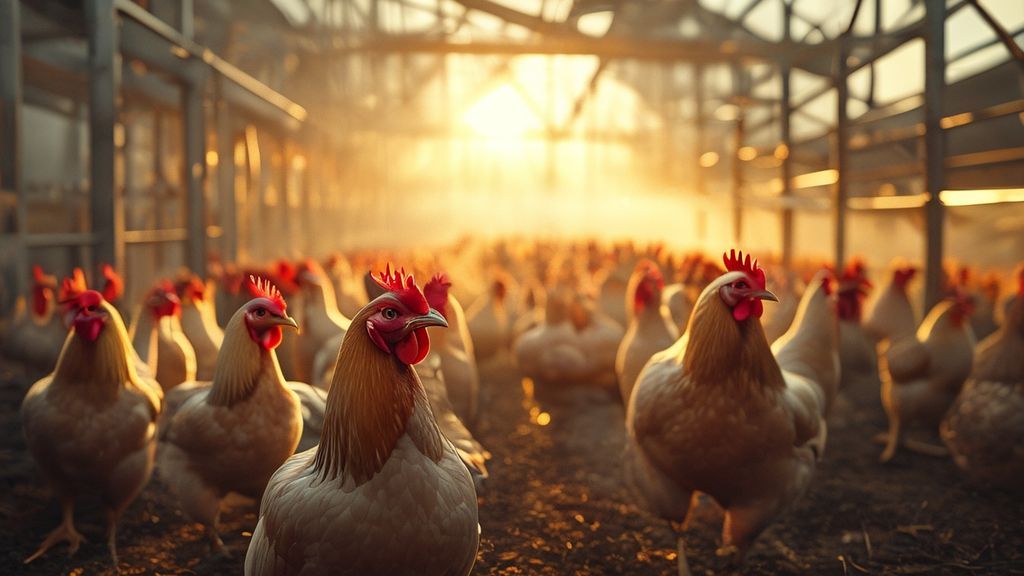
This guide explains how to use the 1,000 chicken farm profit calculator to estimate the potential financial returns of raising 1,000 chickens. This tool is designed to help farmers, investors, and hobbyists understand the costs and revenue associated with a medium-sized poultry operation.
What is the 1,000 Chicken Farm Profit Calculator?
The 1,000 chicken farm profit calculator is a specialized financial tool. It calculates the estimated net profit or loss by analyzing various inputs specific to raising 1,000 birds. The calculator considers factors such as initial setup costs, ongoing operational expenses, and potential revenue from selling chickens or eggs. It provides a clear financial snapshot to aid in decision-making and business planning for a farm of this specific scale.
How to Use the 1,000 Chicken Farm Profit Calculator?
Using the calculator is straightforward. Follow these steps to get an accurate estimate:
- Input Initial Costs: Enter the total cost for acquiring 1,000 day-old chicks, building or leasing a coop, and purchasing initial equipment like feeders and waterers.
- Enter Operational Expenses: Provide details for recurring costs. This includes the price of feed per bag, estimated veterinary and medication costs, utility bills (electricity for lighting/ventilation), and any labor or transportation expenses.
- Set Revenue Parameters: Define your expected income. Input the target sale price per chicken (for meat birds) or the estimated egg production rate and price per dozen (for layers). You can also include other potential revenue streams.
- Calculate: Once all fields are filled, the tool will process the data. It will display a breakdown of total costs, total revenue, and the final projected profit or loss for your 1,000-chicken operation over the specified period.
By adjusting the input values, you can run different scenarios to see how changes in feed prices or sale prices impact your bottom line, helping you plan more effectively.
Running a 1,000-bird chicken farm requires precise financial planning to ensure profitability. This comprehensive guide provides a powerful profit calculator framework and expert insights to help you accurately forecast costs, revenue, and net margins for your poultry operation. By systematically analyzing every financial variable, from initial infrastructure to ongoing feed expenses, you can transform a high-risk venture into a predictable, sustainable business. Understanding the intricate balance between your inputs and outputs is the first step toward achieving long-term success in the competitive poultry industry.
Understanding Your 1,000 Chicken Farm Profit Potential
The profit potential of a 1,000-bird operation hinges on a meticulous analysis of both fixed and variable costs against projected revenue streams. A thorough assessment begins with calculating your cost per bird, which encompasses everything from day-old chick acquisition to processing and marketing. This foundational metric is critical, as it directly informs your break-even point and required selling price per kilogram of meat or per dozen eggs. For meat birds, the typical production cycle ranges from 6 to 8 weeks, requiring multiple batches per year to maximize facility use and revenue. Egg-laying operations, conversely, involve a longer initial investment period before reaching peak production, but offer a continuous revenue stream over 12 to 18 months. Understanding these production timelines is essential for accurate cash flow forecasting and annual profit calculations.
Market dynamics play an equally vital role in determining your farm’s profitability. Local and regional demand for chicken products, competition from other producers, and consumer preferences for organic or free-range options significantly influence your pricing strategy. A well-structured profit calculator must incorporate these market variables, allowing you to model different pricing scenarios and their impact on your bottom line. Furthermore, external factors such as seasonal fluctuations in demand, feed price volatility, and disease outbreaks can dramatically affect your financial outcomes. By building a flexible calculator that accounts for these variables, you can develop robust contingency plans and make informed decisions to protect your profit margins. Ultimately, a deep understanding of your farm’s profit potential empowers you to optimize operations for maximum efficiency and financial return.
Why a Specialized Calculator is Essential for Poultry Farms
Generic financial models often fail to capture the unique economic nuances of poultry farming, making a specialized calculator indispensable for accurate planning. Unlike many agricultural ventures, chicken farming involves rapid production cycles, high feed conversion ratios, and significant mortality rates that must be precisely modeled. A dedicated calculator incorporates these industry-specific factors, providing a realistic projection of financial performance rather than an idealized estimate. For instance, it automatically adjusts for feed efficiency, which can vary between 1.6 to 2.0 kg of feed per kg of live weight, directly impacting your largest operational expense. This level of granularity ensures that your financial forecasts are grounded in the practical realities of poultry production.
The complexity of managing multiple production batches within a single year further underscores the need for a specialized tool. A 1,000-bird farm may run 5 to 6 cycles annually, each with its own set of costs and revenues. A specialized calculator can aggregate these cycles into a coherent annual financial picture, accounting for overlapping expenses and staggered revenue inflows. This is crucial for managing cash flow, as initial investments in feed and chicks are incurred before sales revenue materializes. Moreover, such a tool can model the impact of scaling operations, helping you evaluate whether expanding to 1,500 birds or investing in automation will yield a positive return on investment. By providing a tailored framework, a specialized calculator transforms complex data into actionable insights for strategic decision-making.
Compliance with regulatory and veterinary standards also introduces costs that are unique to the poultry industry, and a specialized calculator ensures these are not overlooked. Expenses related to vaccinations, biosecurity measures, licensing, and potential organic certifications must be factored into your budget to avoid unexpected shortfalls. A robust calculator will have dedicated fields for these line items, allowing you to see their direct impact on your per-bird costs and overall profitability. Furthermore, it can help you assess the financial implications of different housing systems, such as deep litter versus cage systems, by comparing their associated costs and benefits. This comprehensive approach ensures that your financial model reflects the full spectrum of operational requirements, leading to more reliable and actionable profit forecasts.
Key Components of a 1,000 Bird Chicken Farm Budget
A comprehensive budget for a 1,000-bird chicken farm is built upon two primary pillars: initial capital investment and recurring operational expenditures. The initial investment is a one-time cost that sets the stage for production, and it typically includes land acquisition or lease, construction of housing, installation of essential equipment, and the purchase of initial stock. For a 1,000-bird operation, housing costs can range significantly based on materials and design, from simple open-sided sheds to more sophisticated climate-controlled structures. Essential equipment includes feeders, drinkers, heating systems (for broilers), lighting, and ventilation fans, all of which are critical for maintaining bird health and growth rates. Accurately estimating these capital outlays is the first step in determining the total capital required to launch the farm.
Operational costs, which recur with each production cycle, form the largest part of your ongoing budget and are the key to managing daily profitability. Feed constitutes the most significant expense, often accounting for 60-70% of total operational costs. Calculating feed requirements involves understanding the feed conversion ratio and the weight targets for your birds, whether for meat or egg production. Other major operational costs include the purchase of day-old chicks or pullets, veterinary supplies and medications, utilities (water and electricity), and labor. For a 1,000-bird farm, labor may be managed by the owner or require part-time assistance, and this cost must be clearly defined. Additionally, costs for bedding materials, transportation, and marketing should be included to create a complete operational budget.
Overhead and contingency costs are often underestimated but are vital for a resilient financial plan. These include administrative expenses, insurance premiums for the farm and livestock, and a contingency fund for unexpected events such as disease outbreaks or extreme weather. A well-designed budget allocates a percentage of revenue (typically 5-10%) to this contingency fund to mitigate risks. Furthermore, if you plan to process birds on-site, you must include the cost of a slaughter and processing setup, which involves equipment, licensing, and compliance with food safety regulations. For farms selling eggs, costs for grading, packaging, and storage are additional components. By breaking down the budget into these detailed categories, you gain complete visibility into your financial obligations and can identify areas for cost optimization.
Breaking Down Initial Investment vs. Operational Costs
Understanding the distinction between initial investment and operational costs is fundamental to assessing the financial viability and cash flow requirements of your 1,000-bird farm. Initial investment, or capital expenditure (CAPEX), represents the upfront funds required to establish the physical and legal foundation of your operation. This includes the cost of land (if purchasing), construction of poultry houses, installation of infrastructure like water and electrical systems, and the acquisition of major equipment such as feed silos, incubators (for hatcheries), or processing equipment. For a standard 1,000-bird broiler setup, CAPEX can vary widely, from a modest $15,000 for a basic setup to over $50,000 for a more automated and durable facility. These are sunk costs that are not recovered in the short term but are amortized over the lifespan of the assets, typically 10-20 years for housing and 5-10 years for equipment.
Operational costs, or operational expenditure (OPEX), are the ongoing expenses incurred to run the farm on a daily, weekly, and per-cycle basis. Unlike CAPEX, these are variable costs that scale with production volume and are directly tied to revenue. The primary components of OPEX include feed, which is the largest single cost; day-old chicks or pullets; veterinary care and vaccines; utilities; and labor. For example, in a broiler operation, the cost of feed for one cycle of 1,000 birds can easily exceed $2,000, depending on feed prices and growth targets. OPEX must be carefully managed because they directly impact your gross margin. A key financial metric is the cost of production per bird, which is calculated by dividing total OPEX for a cycle by the number of birds sold. This metric is crucial for setting competitive yet profitable selling prices.
The interplay between initial investment and operational costs dictates your farm’s break-even timeline and long-term profitability. A high initial investment in quality infrastructure can lead to lower operational costs over time through improved efficiency, reduced mortality, and better biosecurity. For instance, investing in automated feeders and drinkers can save labor costs and reduce feed wastage. Conversely, a low initial investment may lead to higher OPEX due to inefficiencies and increased risks. A profit calculator is essential here, as it allows you to model different scenarios—such as taking a loan for a high-tech facility versus using cash for a basic setup—and see the impact on your annual cash flow and net profit. This analysis helps you make informed decisions on financing, asset selection, and the optimal balance between CAPEX and OPEX to maximize your return on investment over the farm’s operational life.
Step-by-Step Guide to Using a 1,000 Chicken Farm Profit Calculator
Utilizing a profit calculator for a 1,000-bird operation is a critical exercise in financial planning, moving beyond guesswork to data-driven decision-making. The process begins with inputting fixed capital expenditures, such as the cost of constructing a climate-controlled poultry house (approximately $25,000 to $40,000 for 1,000 sq ft), purchasing feeders, drinkers, and an automated watering system. You must also input the recurring variable costs, which form the bulk of your operational expenditure. The calculator will then require you to define your production cycle parameters. For a broiler (meat bird) operation, this typically involves a 6-8 week growth cycle, while a layer (egg) operation involves a multi-year production period. The core function of the calculator is to subtract total costs from projected revenue. Revenue is calculated by multiplying the number of birds reaching market weight or peak egg production by the current market price per pound or dozen. A robust calculator allows for sensitivity analysis, where you can adjust input variables like feed cost or sale price by 5% or 10% to see how it impacts your net profit margin. This step-by-step input forces you to confront every single cost center, revealing that a 10% increase in feed price can erase your entire profit margin if not accounted for in pricing strategies.
Calculating Feed Costs Per Bird and Per Batch
Feed constitutes the single largest expense in poultry farming, typically representing 60-70% of total production costs. For a 1,000-bird broiler farm, the calculation is meticulous. A modern broiler bird requires approximately 1.8 to 2.2 kilograms of feed to reach a market weight of 2.5 kg (5.5 lbs). Therefore, for 1,000 birds, the total feed requirement per batch is 1,800 to 2,200 kg. If the current feed price is $0.50 per kg, the feed cost per batch ranges from $900 to $1,100. This translates to a feed cost of $0.90 to $1.10 per bird. For a layer farm, the calculation is different. A laying hen consumes about 100-120 grams of feed per day. Over a 365-day period, that’s 36.5 to 43.8 kg per hen. With 1,000 hens, the annual feed requirement is 36,500 to 43,800 kg. At the same $0.50/kg price, the annual feed cost is $18,250 to $21,900, or $18.25 to $21.90 per hen. The profit calculator must differentiate between starter, grower, and finisher feed phases, as each has a different formulation and cost. Furthermore, it must account for feed conversion ratio (FCR), a key metric where a lower FCR (e.g., 1.6) means more efficient feed use and higher profit. The calculator should also include a buffer for feed wastage, which can be as high as 5-10% in poorly managed operations.
Factoring in Veterinary, Labor, and Overhead Expenses
Beyond feed, a comprehensive profit calculator must incorporate a suite of operational expenses that are often underestimated. Veterinary costs are not optional; they include routine vaccinations (e.g., for Marek’s disease, Newcastle disease, Gumboro), deworming, and antibiotics for disease prevention. For a 1,000-bird flock, this can range from $200 to $500 per batch for broilers, or $1,000 to $2,000 annually for layers. Labor is another critical component. Even if the farmer is the primary laborer, the calculator should assign a market-rate value to their time. For a 1,000-bird farm, daily chores (feeding, watering, cleaning) require 1-2 hours, but during peak activities like vaccination or harvesting, it can exceed 4-5 hours daily. Annually, this equates to 365-730 hours of labor. Valuing this at $15/hour adds $5,475 to $10,950 in labor costs. Overhead expenses include utilities (electricity for lighting and ventilation), water, bedding material (litter), equipment maintenance, and insurance. These can add another $1,500 to $3,000 annually. A sophisticated calculator will allow you to input these as fixed or variable costs. For example, electricity is variable with season, while insurance is a fixed annual premium. The total of these “hidden” costs can easily add $8,000 to $15,000 to your annual budget, and failing to account for them is a primary reason why many new farms fail to turn a profit.
Advanced Revenue Projections for Meat vs. Egg Production
Projecting revenue requires a deep understanding of market dynamics and biological cycles, which differ drastically between meat and egg production. For a 1,000-bird broiler farm, revenue is generated in discrete batches. Assuming a 6-week cycle with 1 week for cleaning and restocking, you can achieve approximately 7-8 batches per year. If each bird sells for $10 (based on a 5.5 lb bird at $1.80/lb), the gross revenue per batch is $10,000. Annually, this yields $70,000 to $80,000. However, this is gross revenue; net profit is far lower. For a layer farm, revenue is continuous but follows a production curve. Hens typically start laying at 18-20 weeks and peak at 32-35 weeks, producing 80-90% of their eggs during this period. Production then declines gradually. A 1,000-hen flock can produce approximately 300,000 eggs annually (assuming 300 eggs/hen/year). At a wholesale price of $0.15 per egg, gross revenue is $45,000. However, the market is volatile; prices can swing from $0.10 to $0.25 per egg based on supply and demand. A profit calculator must allow for price volatility modeling. It should also factor in the cost of pullets (young hens), which are a significant upfront investment. Furthermore, for both models, the calculator must project revenue over a multi-year horizon. For layers, the first year includes the pullet cost and low production, while years 2-3 are peak profitability. For broilers, the focus is on annualizing the batch revenue and accounting for potential batch failures due to disease.
Comparing Free-Range vs. Conventional Farming Profitability
The choice between free-range and conventional (intensive) farming has profound implications for profitability, cost structure, and market positioning. A conventional 1,000-bird broiler operation in a controlled house maximizes feed efficiency, minimizes disease risk, and allows for higher stocking density (often 10-12 birds per sq ft). This leads to lower per-bird feed costs (due to optimized FCR) and more predictable yields. However, the initial infrastructure cost is higher for climate control systems. The selling price is typically lower, competing in the mainstream commodity market. A free-range system requires more land (2 sq ft per bird outdoors, so 2,000 sq ft minimum), which increases land lease or purchase costs. The stocking density indoors is lower (6-8 birds per sq ft), and birds have slower growth rates due to higher energy expenditure, increasing the feed cost per bird by 10-15%. However, free-range products command a premium price—often 30-50% higher than conventional. The profit margin per bird can be higher in free-range, but the total annual output is lower due to slower cycles and potentially higher mortality from predators and weather exposure. A comparative table within the profit calculator is essential to model these trade-offs.
| Cost/Revenue Factor | Conventional (1,000 Birds) | Free-Range (1,000 Birds) |
|---|---|---|
| Initial Infrastructure Cost | $30,000 (High-tech house) | $22,000 (Simpler house + fencing) |
| Feed Cost per Bird | $1.10 (Efficient FCR) | $1.25 (Higher FCR) |
| Land Requirement | Minimal (1,000 sq ft) | Significant (3,000+ sq ft) |
| Market Price per Bird | $10.00 | $13.50 |
| Annual Batches/Cycles | 8 | 6 (slower growth) |
| Estimated Annual Net Profit | $15,000 – $20,000 | $18,000 – $25,000 |
As the table illustrates, while free-range has higher per-bird costs and lower output, the premium pricing can lead to a comparable or slightly higher net profit, albeit with different risk profiles. Free-range is more susceptible to external factors like weather and predator attacks, which the calculator must account for with a higher mortality rate assumption (e.g., 5% vs. 2% in conventional). Furthermore, free-range certification (e.g., USDA Organic) involves additional paperwork and compliance costs, which should be factored into the overhead. The choice ultimately depends on the farmer’s capital, land availability, and target market.
Case Study: 1,000 Bird Broiler Farm Annual Profit Analysis
Let’s analyze a concrete example of a 1,000-bird conventional broiler farm operating in a temperate climate. We will assume a standard 6-week production cycle with 8 batches per year. The initial capital investment is $35,000 for the housing and equipment, which we will amortize over 10 years ($3,500 annually). Variable costs per batch are calculated as follows: Day-old chicks cost $3.00 each, totaling $3,000. Feed cost is $1.05 per bird (based on 2.1 kg feed at $0.50/kg). Veterinary and medication cost is $0.25 per bird. Litter and utilities per batch are $0.15 per bird. Labor, valued at $15/hour for 2 hours daily over 42 days, is $1,260 per batch, or $1.26 per bird. Total variable cost per bird is $3.00 + $1.05 + $0.25 + $0.15 + $1.26 = $5.71. With a market price of $10.00 per bird, the gross profit per bird is $4.29. For 1,000 birds, that’s $4,290 per batch. Over 8 batches, gross annual profit before amortization is $34,320. Subtracting the $3,500 annual equipment amortization leaves a net annual profit of $30,820.
However, this is an optimistic scenario. A realistic calculator must incorporate a 3% mortality rate (30 birds lost per batch), reducing sellable birds to 970, and a 5% price volatility buffer. Recalculating with mortality: variable costs are still incurred for all 1,000 chicks (as they are paid for upfront), but revenue is only from 970 birds. This reduces net profit to approximately $28,000 annually. Furthermore, unexpected events like a disease outbreak (adding $500 in emergency vet costs) or a 10% feed price hike can reduce profit by another $2,000-$3,000. Therefore, a prudent profit projection for a well-managed 1,000-bird conventional broiler farm is in the range of $25,000 to $28,000 net profit annually, after accounting for all costs and contingencies. This case study highlights why a detailed, step-by-step profit calculator is not just a tool for optimism, but a necessary instrument for realistic financial survival and planning.
Frequently Asked Questions
What is the average profit margin for a 1,000 chicken farm?
Profit margins for a 1,000-bird chicken farm can vary significantly based on management, location, and market prices. Typically, small-scale poultry farmers can expect a net profit margin ranging from 10% to 30% after all expenses are deducted. However, this is highly dependent on operational efficiency and feed costs.
How much does it cost to start a 1,000 bird poultry farm?
The startup cost for a 1,000-bird farm generally ranges from $10,000 to $25,000. This includes the construction or retrofitting of a chicken coop, purchasing equipment (feeders, waterers, heaters), initial stock (chicks), and the first batch of feed and bedding. Costs can be lower if you already have land and basic infrastructure.
What are the most common expenses in chicken farming that affect profit?
The most significant expenses that impact profitability are feed (accounting for 60-70% of total costs), day-old chicks, veterinary care and medication, electricity (for heating brooders), and labor. Additionally, bedding material, transportation, and packaging for meat sales are recurring costs to monitor.
How long does it take to break even on a 1,000 bird farm investment?
Breaking even typically takes 12 to 18 months. This timeline accounts for the initial setup period and the production cycles required to generate enough revenue to cover startup and operational costs. Faster growth rates, efficient feed conversion, and high market demand can shorten this period.
Can I use a free profit calculator for my 1,000 chicken farm?
Yes, there are free profit calculators available online that can provide a basic estimate for a 1,000-bird farm. These tools are useful for initial planning but often lack the ability to input specific local variables like regional feed prices, labor costs, or fluctuating market rates. For a detailed financial plan, a customized spreadsheet is recommended.
How does feed conversion ratio impact my farm’s profitability?
The feed conversion ratio (FCR) measures how efficiently chickens convert feed into body weight. A lower FCR is better; it means less feed is required to produce a kilogram of meat. Since feed is the largest expense, improving your FCR by even a small margin can significantly increase your profit margin.
What are the best ways to reduce costs on a 1,000 chicken farm?
To reduce costs, focus on improving feed efficiency (proper storage to prevent spoilage, using quality feed), maintaining strict biosecurity to minimize disease and medication costs, and managing energy use efficiently. Buying feed in bulk and exploring local, cheaper feed ingredients (while maintaining nutrition) can also lower expenses.
How do I calculate ROI for my poultry business?
To calculate Return on Investment (ROI), first determine your net profit (Total Revenue minus Total Expenses). Then, divide the net profit by your initial investment cost and multiply by 100 to get the percentage. For example, if your net profit is $5,000 and your initial investment was $15,000, your ROI is (5,000 / 15,000) * 100 = 33.3%.