

1000 Chicken Farm Profit Calculator
This guide explains how to use the 1000 chicken farm profit calculator to estimate potential earnings and manage your agricultural finances effectively.
- 1000 Chicken Farm Profit Calculator
- Profit Calculation Results
- What is the 1000 chicken farm profit calculator?
- How to Use the 1000 chicken farm profit calculator?
- What is a 1000 Chicken Farm Profit Calculator?
- The Core Components of a Poultry Profit Calculator
- Essential Inputs for Accurate Profit Projections
- Why Manual Calculations Fall Short for Large-Scale Farms
- Breaking Down Your Fixed vs. Variable Costs
- Capital Investments: Housing, Equipment, and Initial Stock
- Recurring Expenses: Feed, Labor, and Utilities
- Revenue Streams: Eggs, Meat, and By-Products
- Using the Calculator for Scenario Planning
- How to Model Price Fluctuations and Market Trends
- Impact of Disease Outbreaks on Your Bottom Line
- Frequently Asked Questions
- How accurate is a 1000 chicken farm profit calculator?
- What are the most common mistakes in calculating farm profitability?
- How do I account for seasonal variations in my profit calculations?
- Can I use a profit calculator for organic or free-range chicken farming?
- What is the typical profit margin for a 1000-chicken farm?
- How often should I update my profit calculator inputs?
- Does the calculator include financing and loan repayment costs?
- What software or tools are best for creating a chicken farm profit calculator?
What is the 1000 chicken farm profit calculator?
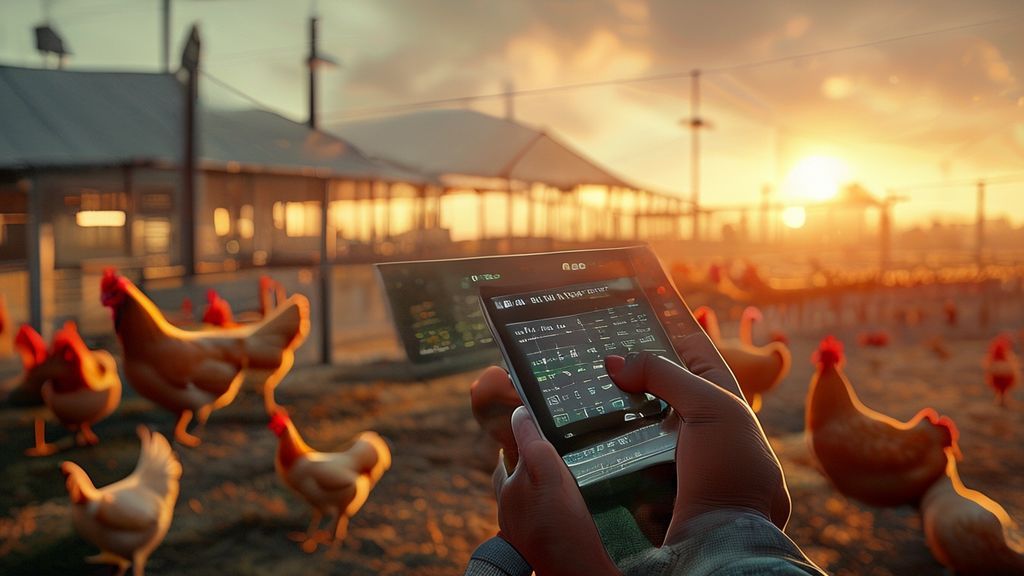
The 1000 chicken farm profit calculator is a specialized financial tool designed for poultry farmers and agricultural investors. It calculates potential profitability based on key variables such as initial investment, operational costs, production yields, and market prices. This calculator helps users make informed decisions by providing a clear overview of financial outcomes for a farm with a capacity of approximately 1,000 chickens.
How to Use the 1000 chicken farm profit calculator?
To effectively use the 1000 chicken farm profit calculator, follow these steps:
- Input Initial Investment: Enter the total startup costs, including land, housing, equipment, and initial flock purchase.
- Enter Operational Costs: Provide details on recurring expenses such as feed, water, utilities, labor, veterinary care, and maintenance.
- Specify Production Details: Input expected production metrics, including the number of chickens, laying rates (if applicable), and growth cycles.
- Set Market Prices: Enter current or projected market prices for eggs, meat, or other poultry products.
- Review Output: The calculator will generate a profit projection, including gross revenue, net profit, break-even points, and return on investment (ROI) estimates.
- Analyze Scenarios: Adjust variables to test different scenarios, such as changes in feed costs or market prices, to understand their impact on profitability.
By regularly using this tool, you can optimize your farm’s operations and plan for sustainable growth.
Running a 1000-chicken farm requires precise financial planning to ensure profitability. This guide introduces a powerful 1000 chicken farm profit calculator and reveals the key factors that determine your farm’s success. Learn how to forecast revenue, manage costs, and optimize your operations for maximum returns.
What is a 1000 Chicken Farm Profit Calculator?
A 1000 chicken farm profit calculator is a specialized financial modeling tool designed to project the economic viability of a medium-to-large-scale poultry operation. Unlike generic budgeting software, this calculator is built around the unique production cycles, cost structures, and revenue streams inherent to broiler or layer farming. It synthesizes complex variables—such as feed conversion ratios, mortality rates, and market prices—into a clear forecast of net profit over a specific period, typically a production cycle or an annual basis. The core function is to simulate various scenarios, allowing farmers to input different assumptions about input costs and output prices to see the potential impact on their bottom line. By providing a data-driven framework, it moves financial planning from guesswork to strategic decision-making, which is critical for securing loans, managing cash flow, and planning expansions. Ultimately, it serves as both a diagnostic tool for current operations and a strategic planner for future growth.
The Core Components of a Poultry Profit Calculator
A robust profit calculator for a 1000-chicken farm is not a single formula but an integrated system of interconnected modules, each representing a critical aspect of the production cycle. The first and most fundamental component is the revenue projection module, which calculates income based on the number of birds sold, their average market weight, and the prevailing price per pound or kilogram. This module must account for the production cycle’s timeline, distinguishing between initial capital investment and recurring revenue. The second vital component is the cost analysis module, which is typically subdivided into major categories: feed (the largest variable cost), day-old chicks or pullets, bedding, utilities (electricity, water, fuel), labor, veterinary supplies, and equipment maintenance. A sophisticated calculator will also include a depreciation schedule for fixed assets like housing, feeders, and waterers, spreading their cost over their useful life to reflect true operational expenses.
Furthermore, the third component is the financial metrics module, which translates raw data into actionable insights. This includes calculating key performance indicators such as the Break-Even Point (the number of birds or pounds of meat needed to cover all costs), Return on Investment (ROI), and Net Profit Margin. Advanced calculators may also integrate a cash flow projection, which is essential for understanding liquidity, as it tracks the timing of inflows (sales) and outflows (feed purchases, payroll) throughout the year. Finally, a comprehensive calculator incorporates a scenario analysis or sensitivity analysis feature. This allows the user to adjust critical variables—like a 10% increase in feed cost or a 5% drop in market price—to instantly see how these changes affect overall profitability, helping farmers build resilience against market volatility and biological uncertainties.
Essential Inputs for Accurate Profit Projections
The accuracy of any profit projection is directly tied to the quality and specificity of the data fed into the calculator. For a 1000-chicken farm, the most critical inputs begin with biological and operational parameters. This includes the type of production (broiler for meat or layer for eggs), the specific breed or hybrid, and the target market weight or egg production rate. Key metrics like the Feed Conversion Ratio (FCR)—the amount of feed required to produce one unit of output (e.g., kg of meat or dozen eggs)—and the expected mortality rate are non-negotiable inputs. The duration of the production cycle (e.g., 42 days for broilers, 72 weeks for layers) and the number of cycles per year must be clearly defined, as they directly impact the annual revenue calculation.
Next, financial and market inputs form the second pillar of accurate forecasting. This requires detailed, current data on all input costs. Feed cost per ton must be specified, often with a breakdown for starter, grower, and finisher phases. The cost of day-old chicks or pullets, bedding material, veterinary services (vaccinations, medications), and utilities (electricity for lighting and ventilation, water) must be quantified. Labor costs, whether for hired staff or an estimated value for family labor, are a significant fixed or semi-fixed cost. On the revenue side, the calculator needs the projected sale price per unit (e.g., price per kg of live weight or per dozen eggs) and any expected premiums for organic or free-range production. Finally, fixed overhead inputs are essential for a true profit picture. This includes loan interest payments, insurance premiums, property taxes, and the annual depreciation value of infrastructure and equipment, which are often overlooked but crucial for long-term sustainability.
Why Manual Calculations Fall Short for Large-Scale Farms
Manual calculations, such as using a basic spreadsheet or a calculator, become increasingly unreliable and inefficient as farm scale increases to 1000 birds. The primary reason is the complexity of interdependent variables. A change in one input, like a slight increase in feed cost, does not have a linear effect on profit; it ripples through the entire financial model, affecting the break-even point, cash flow, and ROI. Manually recalculating these cascading effects for multiple scenarios is time-consuming and prone to human error. For a large-scale operation, the volume of data—tracking daily feed consumption, monitoring bird weight gain, and recording mortality—makes manual consolidation a logistical nightmare, often leading to outdated or inaccurate financial snapshots.
Furthermore, manual methods lack the dynamic forecasting and scenario analysis capabilities that are vital for strategic planning. A static spreadsheet cannot easily model the impact of seasonal price fluctuations, unexpected disease outbreaks, or changes in government subsidy programs. It also fails to account for the time value of money and complex depreciation schedules, which can significantly distort the perceived profitability of an investment. Most critically, manual calculations are often retrospective, providing a historical view of what happened last month, rather than a proactive tool for planning the next cycle. In contrast, a dedicated profit calculator automates complex calculations, ensures consistency in data application, and provides real-time insights, freeing the farmer to focus on operational management and strategic decision-making rather than tedious arithmetic.
Breaking Down Your Fixed vs. Variable Costs
Understanding the financial anatomy of a 1000-chicken operation is the first critical step toward profitability. Costs are broadly categorized into fixed and variable expenses, and a precise calculator must account for both with granularity. Fixed costs are expenses that remain constant regardless of production volume—these are your baseline financial commitments. They include land lease payments or mortgage interest, insurance premiums (liability, property, and crop), annual licensing and regulatory fees, and the depreciation of long-term assets like housing and machinery. For a 1000-bird farm, fixed costs can represent a significant portion of your overhead, often ranging from 15-25% of total annual expenses. Variable costs, conversely, fluctuate directly with the number of birds and the scale of production. These are primarily consumables: feed, bedding, veterinary supplies, fuel for heating and ventilation, and packaging materials. In a poultry operation, feed constitutes the single largest variable cost, typically accounting for 60-70% of all recurring expenses. A robust profit calculator does not merely sum these categories; it allows you to input specific unit costs for each variable—such as the price per ton of feed or per gallon of diesel—and calculates the total based on your flock size and production cycle. This breakdown is essential for identifying leverage points. For instance, if fixed costs are too high relative to projected revenue, the farm becomes vulnerable to market downturns. Conversely, optimizing variable costs through bulk purchasing or efficient feed conversion ratios can dramatically improve margins. The calculator must also model semi-variable costs, like labor, which may have a fixed base salary plus overtime. By separating these cost structures, you gain clarity on your break-even point—the exact number of birds or units of product you must sell to cover all expenses. This foundational analysis prevents the common pitfall of underestimating the true cost of production, ensuring that every financial projection is grounded in operational reality.
Capital Investments: Housing, Equipment, and Initial Stock
The initial capital outlay for a 1000-chicken farm is substantial and must be amortized over the productive life of the assets. A comprehensive profit calculator treats these as long-term fixed costs, spreading their expense across years to reflect their impact on annual profitability. Housing is the most significant capital investment. For 1000 birds, this could range from a simple, naturally ventilated house for broilers to a more sophisticated, environmentally controlled layer house. Costs vary widely: a basic hoop structure might cost $10,000-$15,000, while a fully automated, insulated facility with climate control can exceed $50,000. The calculator should allow you to input the total cost, the estimated useful life (typically 15-20 years for structures), and the depreciation method (straight-line is common). Equipment is another major category. This includes feeders, waterers, brooders (for chicks), ventilation fans, egg collection systems (for layers), and manure handling equipment. For a 1000-bird operation, automated systems can cost between $5,000 and $20,000, depending on the level of technology. The calculator must factor in maintenance and eventual replacement costs. Initial stock purchase is a unique blend of capital and variable cost. Buying 1000 day-old chicks (e.g., broiler or layer hybrids) is a recurring expense for each production cycle, but the first batch represents a significant startup cost. The price per chick varies by breed and supplier, often between $1.50 and $3.00. Furthermore, the calculator should account for “shrinkage”—the expected mortality rate before market readiness, which directly affects the effective cost per surviving bird. To model this accurately, you input the mortality percentage (e.g., 3-5% for broilers), and the calculator adjusts the initial stock cost upward for the remaining birds. This detailed capital modeling ensures you don’t just see a large one-time expense, but understand its annualized impact on your bottom line, which is crucial for securing loans and planning for reinvestment.
Recurring Expenses: Feed, Labor, and Utilities
Recurring expenses are the lifeblood of daily operations and the primary levers for profitability in a 1000-chicken farm. A sophisticated profit calculator models these with dynamic inputs that respond to production variables. Feed is the most critical variable. For broilers, the feed conversion ratio (FCR)—the amount of feed (in kg) needed to produce 1 kg of live weight—typically ranges from 1.7 to 2.0. For layers, the focus is on feed per dozen eggs. The calculator must allow you to input the cost per kg of feed (which can fluctuate with grain markets) and the FCR based on your breed and management. For 1000 broilers reaching a market weight of 2.5 kg, with an FCR of 1.8, total feed consumption would be approximately 4,500 kg per cycle. At $0.50/kg, that’s $2,250 in feed costs alone for one cycle. Labor is often underestimated. While a small farm might be family-run, the true cost includes the value of time. The calculator should differentiate between hired labor (hourly or monthly wages) and owner/operator time. For a 1000-bird operation, daily tasks (feeding, watering, monitoring, cleaning) might require 1-3 hours per day. If hiring part-time help at $15/hour for 2 hours daily, annual labor costs can exceed $10,000. Utilities—electricity for lighting and ventilation, and water for birds and cleaning—are significant. The calculator should model these based on local rates and usage patterns. For example, a well-ventilated house might use $200/month in electricity during winter for heating and fans. Water consumption is also critical; chickens drink approximately twice their feed intake. By inputting these recurring costs per cycle or per year, the calculator provides a real-time view of cash flow. This allows you to test scenarios: What if feed costs rise by 10%? How does improving FCR to 1.75 impact profit? This granularity transforms the calculator from a simple spreadsheet into a strategic management tool, highlighting where efficiency gains will have the greatest financial impact.
Revenue Streams: Eggs, Meat, and By-Products
Revenue generation for a 1000-chicken farm is multifaceted, and a profit calculator must accurately model each stream to reflect true earning potential. The primary revenue comes from the sale of eggs or meat, depending on the farm’s focus. For a layer operation, revenue is calculated as: (Number of hens) x (Eggs per hen per year) x (Price per dozen) / 12. A productive layer can lay 280-320 eggs per year. At a conservative 300 eggs, 1000 hens produce 250,000 eggs annually. If sold at $3.00 per dozen, gross revenue is $62,500. For a broiler operation, revenue is: (Number of birds) x (Market weight) x (Price per kg). With 1000 birds at 2.5 kg each and a price of $2.50/kg, revenue per cycle is $6,250. Multiple cycles per year (e.g., 5-6 for broilers) multiply this figure. However, the calculator must deduct processing costs if not selling live birds. On-farm processing adds labor and equipment costs but can command higher prices. By-products present an often-overlooked revenue stream. Manure, when composted, can be sold as organic fertilizer. For 1000 birds, manure production is significant—broilers can produce 10-15 tons of manure annually. At $20/ton for composted manure, that’s an additional $200-$300. Feathers, if collected, can be sold for niche markets (e.g., craft or filling). The calculator should include a field for “other revenue” to capture these secondary streams. Furthermore, it must account for production losses. Not all eggs are saleable (breakage, dirt), and not all birds reach market weight. A mortality rate of 3-5% must be factored into the revenue calculation. For example, if 50 birds die in a broiler cycle, you lose that revenue portion. The calculator should also model price volatility. By allowing you to input a range of prices (low, medium, high), you can see revenue projections under different market conditions. This holistic revenue modeling ensures you capture all income sources and understand the sensitivity of your profit to key variables like yield and market price, which is essential for realistic financial planning.
Using the Calculator for Scenario Planning
A 1000-chicken farm profit calculator is not a static document but a dynamic tool for strategic scenario planning. Its true value lies in its ability to simulate “what-if” analyses, allowing you to test the impact of various operational and market changes before they occur. Scenario planning involves creating multiple versions of your financial model by altering key input variables. For instance, you can create a “Best Case” scenario with high egg prices, low feed costs, and minimal mortality. A “Worst Case” scenario might incorporate a 20% drop in meat prices, a 15% increase in feed costs, and a disease outbreak with 10% mortality. The “Most Likely” scenario uses current market data and historical averages. By comparing the net profit from each scenario, you can assess the farm’s resilience and identify potential risks. The calculator should facilitate this by having a clear structure where you can easily change inputs and immediately see the effect on the bottom line. This process helps in making informed decisions, such as whether to expand the flock, invest in automated equipment, or switch production types (e.g., from broilers to layers). It also aids in securing financing, as lenders appreciate seeing a range of outcomes and your preparedness for downturns. Furthermore, scenario planning can reveal hidden opportunities. For example, you might discover that investing in a small solar array to reduce utility costs has a payback period of only 3 years in your “High Utility Cost” scenario. The calculator becomes a sandbox for innovation, allowing you to quantify the financial impact of strategic changes. This proactive approach transforms the calculator from a mere accounting tool into a core component of your business strategy, enabling you to navigate uncertainty with data-driven confidence.
How to Model Price Fluctuations and Market Trends
Price fluctuations are a constant reality in agriculture, and a sophisticated profit calculator must model them to avoid optimistic bias. To do this, you need to move beyond single-point estimates and incorporate price volatility. One effective method is to use a range of prices for key inputs and outputs. For feed costs, which are tied to global grain markets, you can input a base price (e.g., $0.50/kg) and then a percentage increase or decrease (e.g., ±15%). The calculator then computes profit for each point in the range, showing you the sensitivity of your operation to feed price swings. For output prices, historical data is invaluable. You can analyze past 5-year trends for egg or chicken prices in your region to establish a baseline and a standard deviation. The calculator can then use this to generate a probability distribution of prices. For example, it might show that there’s a 70% chance of eggs selling between $2.80 and $3.20 per dozen, and a 30% chance of falling outside that range. This allows you to calculate expected value rather than a single, potentially misleading figure. Market trends should be incorporated as assumptions. If the trend is toward organic or free-range products, you can model a premium price (e.g., 20% higher than conventional) but also higher variable costs (more space, specialized feed). The calculator should have a dedicated section for “Market Assumptions” where you can input these trend-based premiums or discounts. Furthermore, you can model seasonal fluctuations. Egg prices often dip during spring and summer when production is high. The calculator could allow you to input different prices for different quarters of the year. By explicitly modeling price fluctuations, you prepare for the inherent volatility of the market. This not only helps in risk assessment but also in timing your sales—you might hold inventory (e.g., frozen meat) if you anticipate a price rise, a strategy whose profitability can be tested within the calculator.
Impact of Disease Outbreaks on Your Bottom Line
Disease outbreaks represent one of the most severe threats to poultry farm profitability, and a robust profit calculator must model their catastrophic impact with realistic detail. The financial consequences extend far beyond the immediate loss of birds. First, direct mortality: an outbreak like Avian Influenza or Newcastle Disease can wipe out 50-100% of your flock. The calculator should allow you to input an expected mortality percentage due to disease. For a 1000-bird farm, a 50% loss means losing 500 birds. The revenue impact is immediate and severe—half of your projected income for that cycle disappears. Second, culling and disposal costs: government regulations often mandate the culling of entire flocks to contain disease. This involves labor for culling, and fees for carcass disposal (rendering or burial), which can cost $2-$5 per bird. For 1000 birds, that’s an additional $2,000-$5,000 in unplanned expenses. Third, downtime and restocking: after a disease event, farms must undergo a rigorous cleaning and disinfection process, followed by a mandatory downtime period (often 21-30 days) before new birds can be introduced. During this period, there is zero revenue, but fixed costs (mortgage, insurance, loan payments) continue to accrue. The calculator should model this downtime as a period of negative cash flow, adding stress to the farm’s finances. Fourth, biosecurity upgrades: an outbreak often forces investments in enhanced biosecurity measures—new footbaths, improved ventilation, stricter visitor controls—which are capital expenditures that reduce future profit. Finally, market access issues: after a disease event, some buyers may refuse purchases from the region for a period, depressing prices. The calculator can model this as a temporary price reduction. To use this in planning, you can run a “Disease Outbreak” scenario with these combined inputs: high mortality (e.g., 75%), culling costs, downtime, and potential price discounts. This will show you the devastating impact on annual profit and cash flow. It underscores the critical importance of insurance (which the calculator can include as a fixed cost) and the need for an emergency fund. By quantifying these risks, the calculator helps you justify investments in prevention, which are always cheaper than the cost of an outbreak.
Frequently Asked Questions
How accurate is a 1000 chicken farm profit calculator?
The accuracy depends entirely on the quality of the data you input. A calculator is a tool that processes your numbers; it cannot predict market fluctuations or unexpected events like disease outbreaks. For the best results, use historical data from your farm and update it with current market prices for feed, birds, and meat.
What are the most common mistakes in calculating farm profitability?
The most common mistakes include underestimating feed conversion ratios, forgetting to account for mortality rates, overlooking fixed costs like insurance and equipment depreciation, and failing to include your own labor as a cost. Many farmers also use projected prices rather than actual realized prices.
How do I account for seasonal variations in my profit calculations?
To account for seasonality, you should run separate calculations for different times of the year. Input variables like feed costs, which may fluctuate based on harvest seasons, and heating or cooling costs, which vary with weather. Averaging these results over 12 months gives a more realistic annual picture.
Can I use a profit calculator for organic or free-range chicken farming?
Yes, you can use a profit calculator, but you must adjust the input variables to reflect the specific costs and revenue streams of organic or free-range systems. This includes higher feed costs, potentially slower growth rates, different mortality rates, and a premium price point for the final product.
What is the typical profit margin for a 1000-chicken farm?
Profit margins vary significantly based on management, location, and market conditions. However, a well-managed small-scale broiler operation might see a net profit margin ranging from 10% to 25% per cycle. It is crucial to calculate based on your specific costs rather than relying on industry averages.
How often should I update my profit calculator inputs?
You should review and update your inputs at least once per production cycle or whenever there is a significant change in market prices for feed, chicks, or fuel. For annual planning, a full review before the start of a new year is recommended.
Does the calculator include financing and loan repayment costs?
A comprehensive profit calculator should have a section to input loan details, including principal, interest rates, and repayment schedules. If you are using a basic template, you may need to add these as a fixed monthly or annual operating expense to see your true net profit.
What software or tools are best for creating a chicken farm profit calculator?
Microsoft Excel and Google Sheets are the most popular and flexible tools for creating a custom profit calculator. They allow you to build formulas tailored to your specific operation. For more advanced needs, specialized agricultural management software like Farmbrite or Poultry Manager may offer integrated financial tracking.