Trusses Cost Calculator
Use this guide to understand and operate the Trusses Cost Calculator.
- Trusses Cost Calculator
- What is the Trusses Cost Calculator?
- How to Use the Trusses Cost Calculator
- What is a Trusses Cost Calculator?
- Why Manual Estimates Fall Short
- Key Factors That Influence Truss Costs
- Material and Span Complexity
- Labor and Installation Variables
- How to Use an Online Calculator Effectively
- Gathering Your Project Measurements
- Comparing Truss Types: Gable vs. Scissor vs. Attic
- Pro Tips for Reducing Your Final Truss Bill
- When to Invest in Custom Designs
- Frequently Asked Questions
- How accurate are online truss cost calculators?
- What is the average cost per truss in 2023?
- Do truss calculators include installation costs?
- How does roof pitch affect the total price?
- Can I use a calculator for a pole barn or commercial building?
- Are engineered trusses more expensive than stick framing?
- What hidden costs should I look out for?
What is the Trusses Cost Calculator?
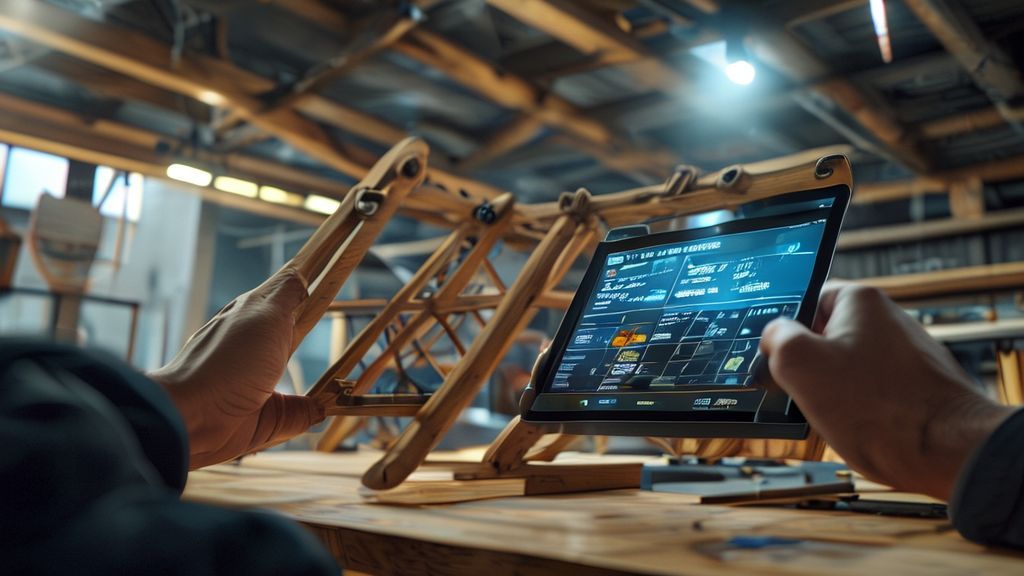
The Trusses Cost Calculator is a specialized estimation tool designed to help homeowners, contractors, and builders determine the potential expenses associated with purchasing and installing roof trusses. By inputting specific dimensions and material preferences, users receive an instant, customized cost projection based on current market rates.
How to Use the Trusses Cost Calculator
Follow these steps to accurately estimate your project costs:
- Enter Roof Dimensions: Input the total length and width of the roof area where the trusses will be installed. This helps the tool calculate the total linear footage.
- Specify Span and Spacing: Provide the span (distance the truss covers) and the desired spacing between trusses (usually 24 inches on center).
- Select Material Type: Choose the type of wood or material (e.g., standard dimensional lumber, engineered wood) intended for the trusses.
- Calculate: Review the generated total cost. This figure typically includes the price of materials and labor for fabrication, but may exclude delivery and installation depending on the specific parameters set.
Planning a roofing project can be overwhelming, especially when trying to budget for structural components. A trusses cost calculator simplifies this process, giving you a fast and accurate estimate to avoid unexpected expenses. These digital tools act as a preliminary financial compass, allowing homeowners and contractors to gauge the potential investment required before engaging with suppliers. By inputting specific project parameters, users can bypass the guesswork associated with traditional estimation methods, ensuring that the financial planning phase of construction is as precise as the engineering behind the roof itself.
What is a Trusses Cost Calculator?
A trusses cost calculator is a specialized digital tool designed to compute the estimated price of prefabricated roof trusses based on a variety of user-inputted variables. Unlike generic construction calculators, these tools are tailored to the specific metrics of truss manufacturing, such as board footage, pitch, and material type. The primary function of this calculator is to provide a baseline budget figure, helping stakeholders understand the scale of investment required for the roof structure before receiving formal quotes from lumber yards or manufacturers.
The operational mechanism of these calculators relies on algorithms that factor in current market prices for lumber (like spruce, pine, or fir) and the geometric complexity of the roof design. Users typically input the dimensions of the building, the desired roof pitch, and the type of truss configuration needed, such as a standard fink or a more complex scissor truss. The calculator then processes this data to output an estimated cost per truss or a total package price. This immediate feedback loop is invaluable for preliminary budgeting, allowing for adjustments to the design to align with financial constraints early in the planning phase.
Furthermore, it is crucial to recognize that these calculators provide estimates, not binding quotes. The final cost can fluctuate based on fuel surcharges, delivery fees, and the specific negotiation power of the buyer. However, the educational value of the calculator lies in its ability to demystify the cost structure. It breaks down the expense into understandable components, teaching the user how specific design choices—like reducing the span or simplifying the pitch—directly correlate to the bottom line. This empowers clients to make informed decisions rather than accepting a vague lump-sum figure.
Why Manual Estimates Fall Short
Relying on manual estimation methods, such as hand-drawn sketches or basic spreadsheet formulas, often leads to significant inaccuracies when budgeting for roof trusses. The primary reason for this failure is the sheer complexity of truss engineering, which involves intricate load calculations and precise material takeoffs. A manual estimate rarely accounts for the nuanced variations in lumber grades or the specific engineering requirements needed to meet local building codes. Consequently, these rough guesses frequently result in budgets that are either dangerously low, leading to financial shortfalls during construction, or unnecessarily high, causing clients to over-allocate funds that could be used elsewhere.
Manual methods also struggle to keep pace with the volatility of material prices. Lumber costs can fluctuate dramatically due to supply chain issues, seasonal demand, and economic factors. A calculator, especially one that is regularly updated, can pull in current pricing data to reflect the market reality of the day. In contrast, a manual estimate based on last year’s prices or a contractor’s “gut feeling” is almost guaranteed to be outdated. This lack of real-time data integration makes manual estimates unreliable for long-term project planning, often leading to disputes and change orders when the actual bills arrive.
Additionally, the human element in manual estimation introduces a high risk of calculation errors. Simple mistakes in measuring the roof pitch, calculating the total board feet, or forgetting to include waste factors can skew the results significantly. These arithmetic errors compound when dealing with complex rooflines featuring multiple hips, valleys, or dormers. A digital calculator systematically eliminates these calculation errors by following a consistent algorithmic logic, ensuring that every variable is factored in correctly every time. This reliability provides a level of confidence that manual math simply cannot match.
Key Factors That Influence Truss Costs
The cost of roof trusses is not determined by a single factor but is the result of a complex interplay between material, design, and logistical variables. Understanding these key influencers is essential for interpreting the output of a cost calculator and for making strategic decisions to optimize the budget. The most significant drivers include the type and quality of materials used, the geometric complexity of the truss design, and the labor required for both manufacturing and installation. Each of these elements carries its own weight in the final price tag, and a change in one can ripple through the entire cost structure.
Material costs form the foundation of the estimate, encompassing not just the lumber itself but also the metal connecting plates and any treatments applied to the wood. Beyond raw materials, the design complexity plays a massive role; a simple gable roof with a standard pitch is far more economical than a roof with multiple intersecting planes or steep slopes. Furthermore, logistical factors such as delivery distance and the difficulty of the job site can add substantial costs. A comprehensive calculator takes these disparate factors and synthesizes them into a cohesive estimate, reflecting the true cost of the project.
Material and Span Complexity
The span of a truss—meaning the total width of the building it needs to cover—is perhaps the single most influential factor in material cost. As the span increases, the truss requires more lumber and larger components to maintain structural integrity, leading to a direct increase in board footage and weight. This escalation is not linear; a truss for a 40-foot span requires significantly more engineering and material than two 20-foot spans combined. Consequently, wider buildings inherently demand a higher budget for their roofing structures, a detail that is immediately reflected in calculator outputs.
Complexity in truss design also dictates the amount of material and the level of engineering required. A standard Fink truss (W-shape) is highly efficient and uses material economically. However, designs like Scissor trusses (which offer vaulted ceilings) or Attic trusses (which create usable storage space) require more lumber and intricate webbing patterns. These complex shapes are more labor-intensive to manufacture and often necessitate stronger connection plates. The calculator must account for these variations, as a complex truss can cost upwards of 20-30% more than a standard one of the same span due to the increased material and manufacturing time.
Furthermore, the grade and treatment of the lumber add layers to the cost calculation. Standard untreated spruce-pine-fir (SPF) is the most affordable option, while Douglas Fir offers higher strength at a premium. In regions prone to moisture or termites, pressure-treated wood or borate treatments become necessary, adding to the material cost. The choice of metal plate connectors—ranging from standard gusset plates to thicker, engineered plates—also impacts the price. A sophisticated calculator allows users to select these material options to see how upgrading to a higher grade or adding treatment affects the total estimate, providing a clear picture of the trade-offs between durability and cost.
Labor and Installation Variables
Labor costs constitute a substantial portion of the total expense, and they are often the most difficult to estimate accurately without professional input. The installation of trusses is a specialized task that requires a certified crew, a crane operator, and often an engineer to supervise the bracing process. The complexity of the installation site heavily influences these costs; a remote job site or a location with difficult access will require more time and potentially more specialized equipment, driving up the labor bill. A cost calculator may provide a separate line item for installation or include a multiplier to reflect these variables.
The method of installation is another critical variable. For large commercial projects or multi-story residential builds, a crane is almost always required to lift the trusses into place. The rental cost of the crane, typically billed by the hour or day, plus the salary of the operator, adds a significant sum to the project total. In contrast, smaller residential projects might allow for manual lifting by the crew, but this can be physically demanding and slower, potentially increasing the man-hours required. Calculators often estimate installation costs as a percentage of the material cost, but this can be adjusted based on the expected complexity of the lift.
Finally, the labor costs are also influenced by the need for temporary bracing and permanent decking. Once the trusses are set, they must be immediately braced to ensure they do not fall out of plumb, a process that requires additional labor and materials. Following this, the installation of roof decking (plywood or OSB) adds another layer of labor. The complexity of the roof—such as multiple hips and valleys—increases the cutting and fitting required for the decking, further inflating labor hours. Understanding these installation nuances helps explain why the labor portion of a truss project can vary as much as the material costs themselves.
How to Use an Online Calculator Effectively
Using a trusses cost calculator is not as simple as plugging in a single number and receiving a definitive quote. These tools are estimation engines designed to provide a baseline based on the variables you input. To use them effectively, you must approach the process with a strategic mindset, understanding that the accuracy of the output is directly proportional to the quality of the input data. Most online calculators operate on a per-linear-foot basis, but this can be misleading without context. You should start by identifying the specific calculator’s algorithm. Does it account for regional material price fluctuations? Does it differentiate between the cost of raw lumber and the cost of engineered labor? A robust calculator will ask for the span, the spacing, and the load requirements. If a calculator only asks for “square footage,” be wary; it is likely generating a ballpark figure that ignores the structural realities of your specific build.
To maximize the tool’s utility, treat it as an iterative design tool rather than a static quote generator. Begin by inputting your ideal specifications to see the upper limit of your budget. Then, adjust the variables to see where costs drop. For example, increase the truss spacing from 16 inches on center to 24 inches on center. This single change reduces the total number of trusses required, which impacts both material and delivery costs. However, this efficiency comes at the cost of requiring thicker top chords to handle the increased load span. A high-quality calculator will reflect this trade-off. If it doesn’t, you are looking at a marketing gimmick, not a structural tool. Always look for a “detailed breakdown” view that separates costs for webbing, chords, plates, and delivery. This breakdown allows you to identify where you can negotiate with suppliers or where value engineering can be applied.
Gathering Your Project Measurements
The precision of your cost estimate relies entirely on the accuracy of the measurements you gather before approaching the calculator. Vague measurements lead to vague quotes, which lead to budget overruns. You must move beyond simply measuring the length of the building. To feed a trusses cost calculator correctly, you need to define the geometry of the roof system. The most critical measurement is the total span (the width of the building from outside plate to outside plate) and the total length (the run of the building). However, the most frequently overlooked measurement is the pitch, or slope, of the roof. A 4/12 pitch roof requires significantly different lumber grades and truss designs than a 12/12 pitch roof. The calculator uses the pitch to calculate the hypotenuse (the true length of the chord) and the surface area for sheathing costs.
Beyond the basic dimensions, you must gather data regarding the “dead loads” and “live loads” specific to your location. This is where amateur calculations often fail. Dead load is the weight of the truss itself plus the roofing material (shingles, metal, underlayment). Live load is the weight of snow, wind, and maintenance workers that the roof must support. A calculator effective for a build in Florida (high wind, low snow) will fail to provide a safe or accurate estimate for a build in Colorado (high snow load). You will need to input your local ground snow load (found in local building codes) and the wind speed rating. Finally, gather measurements for any “overhangs” or “soffits.” These extensions beyond the exterior wall add to the chord length and require “tail” cuts, which add material and labor costs. Without these measurements, the calculator will underestimate the final bill by 5-10%.
Comparing Truss Types: Gable vs. Scissor vs. Attic
When utilizing a trusses cost calculator, the selection of the truss type is the most significant factor influencing the final price. The geometry of the truss dictates the complexity of the webbing, the length and thickness of the lumber, and the labor required for assembly. The three most common types—Gable, Scissor, and Attic—serve different structural and aesthetic purposes, and their cost profiles differ drastically. The Gable truss is the industry standard for simple, symmetrical roofs, while the Scissor truss offers architectural flair, and the Attic truss provides usable living space. Understanding these differences allows you to input the correct “Truss Type” variable into your calculator to avoid sticker shock.
| Truss Type | Cost Factor | Space Utility | Complexity |
|---|---|---|---|
| Gable (Standard) | Lowest | None (Attic space is limited) | Low |
| Scissor (Vaulted) | Medium-High | Creates vaulted ceilings | Medium (Requires precise webbing) |
| Attic (Storage/Living) | Highest | High (Usable floor space) | High (Requires heavy lumber) |
The Gable Truss is typically the default option in cost calculators. It features a simple triangular shape with a horizontal bottom chord. Because the geometry is straightforward, the webbing pattern is simple, and the lumber lengths are predictable, this is the most economical choice. However, if you select this in a calculator, you are committing to a flat ceiling in the room below the roof unless you build a separate ceiling system. The Scissor Truss, or Vaulted truss, features a bottom chord that slopes upward, crossing the bottom chords of adjacent trusses. This creates a vaulted ceiling inside. In a calculator, this will spike the cost because it requires longer top chords and more complex webbing cuts. It also requires a wider “bearing width” on the walls to support the asymmetrical loads. If you are looking for aesthetic appeal, you must budget for a 15-25% increase over standard gable trusses.
The Attic Truss (sometimes called a Room-in-Attic truss) is the most expensive option, but it provides the highest value. These trusses are designed with a wide bottom chord and heavy webbing to support a floor, creating a habitable space within the roof structure. When inputting this into a calculator, you must specify the “room width” you desire, as this dictates the size of the bottom chord lumber (often 2×8 or 2×10 rather than 2×4). The calculator will also factor in the cost of bridging (bracing) and the need for vertical supports (posts) within the webbing. While the truss package itself will be significantly more expensive than gable trusses, the overall project cost may be lower because you are eliminating the need to build a separate floor structure for that space. However, for a pure truss cost comparison, the Attic truss is the premium choice.
Pro Tips for Reducing Your Final Truss Bill
Reducing the final bill for your truss package goes beyond simply finding the cheapest supplier. It requires a holistic approach to design, logistics, and material selection. The truss cost is a function of volume and efficiency; every cut that deviates from the standard, every extra piece of lumber, and every mile traveled adds to the bottom line. The most effective way to lower costs is to simplify the building footprint. Complex rooflines with multiple valleys, hips, and dormers require “hip” and “valley” trusses, which are custom-cut and significantly more expensive than “run” trusses (the straight, repetitive ones). By designing a simple rectangular footprint with a standard gable or shed roof, you allow the truss manufacturer to use repetitive cutting patterns, reducing waste and labor costs.
Another critical strategy involves optimizing the truss spacing. Standard spacing is usually 24 inches on center. While you can space them further apart (up to 24 inches is usually the maximum for standard sheathing), you must consult the calculator to see if the lumber costs balance out. Reducing the number of trusses saves on delivery and installation time, but it requires larger, more expensive lumber for the chords to span the wider gap. Conversely, closer spacing (19.2 inches) allows for smaller lumber but increases the number of trusses. You should also consider “stock” or “promotional” plans. Many manufacturers have standard engineering plans for common spans that they produce in bulk. If your span matches their stock (e.g., a 60-foot span at a 4/12 pitch), you can often get a discount because they are essentially selling pre-engineered inventory. Finally, always ask about “cash” or “early pay” discounts. Truss plants have high cash flow needs; offering payment upon delivery can often shave 3-5% off the total bill.
When to Invest in Custom Designs
There comes a point where the cost of modifying a standard design exceeds the cost of simply commissioning a custom design. A trusses cost calculator is excellent for standard spans, but when your project involves unique constraints, investing in custom engineering is not an indulgence—it is a financial and structural necessity. Custom designs are required when the standard “off-the-shelf” trusses cannot fit the architectural vision or the site conditions. For example, if you are building on a steep slope where the trusses will sit on different elevations, or if you have a monolithic ceiling that transitions from a flat area to a sloped area, standard trusses will not work. Attempting to force standard trusses into these scenarios often results in expensive field modifications, delays, and potential structural failure.
Furthermore, custom designs are often the most cost-effective solution for complex architectural features like cantilevered eaves or steep roof pitches. While the engineering fee is an upfront cost, it allows the manufacturer to optimize the lumber usage precisely for the load. A custom engineer can specify a specific grade of lumber that meets the load requirements without the waste of using a “one size fits all” approach. Additionally, if you are building a barndominium or a post-frame building with clear-span widths exceeding 60 feet, standard trusses may require internal posts that ruin the open floor plan. A custom ” bağl” or “poly” truss design can clear-span that distance without internal supports, allowing for an open interior that is highly desirable for barndominiums. In these scenarios, the cost of the custom truss is offset by the value it adds to the finished building’s usability and aesthetic appeal.
Frequently Asked Questions
How accurate are online truss cost calculators?
Online truss cost calculators provide a preliminary estimate based on average market data, but they are rarely 100% accurate. They do not account for local labor rates, specific site accessibility, or sudden fluctuations in raw material prices. For a precise quote, you should always follow up with a local truss manufacturer or general contractor.
What is the average cost per truss in 2023?
In 2023, the average cost for a prefabricated wood truss typically ranges from $100 to $400 per truss. However, this price varies significantly based on the size, complexity of the design, and the type of wood used. Larger or custom-engineered trusses can cost significantly more.
Do truss calculators include installation costs?
Most basic online calculators estimate the cost of the materials only (the manufacturing price). They usually do not include installation costs, which cover labor, crane rental, delivery fees, and securing the trusses to the structure. Always check if the calculator has a toggle for “installed” vs. “materials only.”
How does roof pitch affect the total price?
A higher roof pitch generally increases the total cost. Steeper pitches require more lumber, larger truss chords, and often more complex bracing. Additionally, labor costs rise because working at steeper heights is more difficult and dangerous, and it may require specialized equipment like scaffolding or aerial lifts.
Can I use a calculator for a pole barn or commercial building?
Yes, you can use them for a general idea, but they are often optimized for standard residential stick-framed roofs. Pole barns and commercial buildings frequently require different engineering specifications, such as raised-heel trusses or gable end walls, which may not be fully captured by a standard residential calculator.
Are engineered trusses more expensive than stick framing?
Initially, engineered trusses often cost more in materials than the raw lumber required for stick framing. However, they usually save money in the long run. Trusses are fabricated off-site, which drastically reduces labor time on-site, minimizes waste, and allows the roof to be installed in a single day, often making the total project cost lower than stick framing.
What hidden costs should I look out for?
When budgeting for trusses, look out for delivery fees (especially if a semi-truck cannot access your site), engineering fees for custom plans, sales tax, and the cost of temporary bracing during installation. You may also face costs for modifying trusses if they do not fit perfectly upon delivery.